
Second-Story or Dormer Addition Design in Farmington Hills, MI
Dormers and second stories are one of the most tempting ways to expand a house.
They promise more bedrooms.
More ceiling height.
More usable square footage.
But they are also one of the easiest ways to destroy the architecture of a home.
Across Farmington Hills—in neighborhoods like Wood Creek Farms, Ramblewood, Forest Park, Hunters Pointe, and Independence Commons—you can see many houses where dormers were added without understanding the roof structure of the original design.
The result is usually visible from the street.
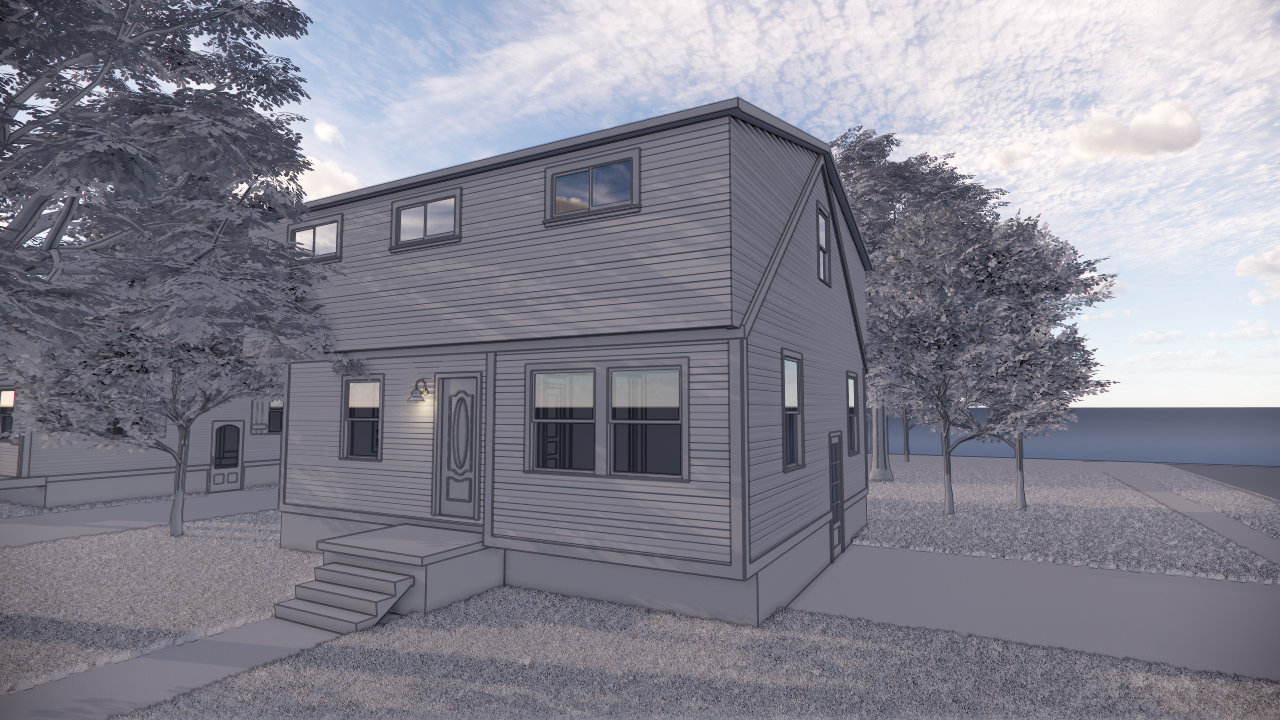
Seen a renovation like this?
The roofline feels top-heavy.
The dormer looks oversized.
The house loses the quiet balance it once had.
Homes built between the 1930s and the 1960s were designed with very simple roof geometries. When new dormers or second stories ignore those geometries, the entire composition begins to feel unstable.
The purpose of Second-Story or Dormer Addition Design is not simply to add space to the roof.
The goal is to expand the house while respecting the architecture that already exists.
Why Dormer Additions So Often Go Wrong
Many dormer projects begin with a simple instruction:
“Let’s just add a big dormer across the back.”
But rooflines are not blank canvases.
They are structural and visual systems that control how the entire house reads from the street.
When dormers are added without understanding the system, several problems appear quickly:
dormers that are too wide
roof slopes that clash with the original pitch
windows that break the rhythm of the house
additions that visually flatten the roof
These issues are especially noticeable on Cape Cod, bungalow, and small mid-century homes, which are common throughout Farmington Hills.
Once the roofline is altered incorrectly, the problem is extremely difficult to undo.
How I Evaluate a Dormer or Second-Story Addition
Before designing any roof expansion, I study three key architectural relationships.
1. The Original Roof Geometry
Every roof has a logic.
Some homes rely on a single dominant ridge.
Others depend on intersecting gables.
Understanding that geometry tells us where expansion can occur without breaking the roof.
2. The Massing of the Existing House
A small house cannot support a massive dormer.
The size of the dormer must relate to the overall scale of the structure below it.
If the upper structure becomes visually dominant, the house loses its balance.
3. The Window Rhythm
Dormers introduce new windows into the roof.
Those windows must align with the architectural rhythm of the facade below. When they don’t, the house begins to feel visually chaotic.
Design Strategies That Work for Mid-Century Homes
Certain dormer and second-story approaches work particularly well for homes built between 1930 and 1960.
Carefully Sized Shed Dormers
These can expand interior space without overpowering the roofline when proportioned correctly.
Balanced Gable Dormers
Gable dormers can reinforce the rhythm of the facade when aligned with existing window spacing.
Partial Second-Story Expansions
Rather than raising the entire roof, partial second stories can maintain the scale of the house while adding useful space.
Rear Roof Expansions
Sometimes the best dormer location is where it is least visible from the street, preserving the original front elevation.
The goal is always the same: increase usable space while keeping the architecture calm and coherent.
When a Dormer or Second Story Makes Sense
A roof expansion often becomes necessary when:
bedrooms feel cramped
ceiling heights are limited
attic space is underutilized
the home lacks enough sleeping space
the existing footprint cannot expand outward
But not every home is a good candidate.
Sometimes the architecture suggests a different solution, such as a rear addition or layout reconfiguration.
The first step is always to understand what the house can support without losing its identity.
Investment for Dormer & Second-Story Addition Design
Design investment varies depending on the complexity of the roof structure and the number of concepts explored.
Typical ranges:
Dormer feasibility consultation: high three figures to low four figures
Full dormer or second-story design studies: low to mid four figures
Thoughtful design planning often prevents structural changes that could cost tens of thousands to correct later.
Areas We Serve
Second-Story and Dormer Addition Design is offered throughout Farmington Hills, MI, including:
Wood Creek Farms
Ramblewood
Forest Park
Hunters Pointe
Independence Commons
These neighborhoods include many mid-century homes where roof expansions are common but require careful design.
Thinking About Expanding Upward?
Dormers and second stories can dramatically improve a house, but only when they respect the structure that was already there.
If the roof is going to change, it should change in a way that strengthens the architecture of the house, not weakens it.
