
3D Hi-Resolution As-Built Scanning in Farmington Hills, MI
Most renovation mistakes are not design mistakes.
They are measurement mistakes.
Homeowners often begin planning additions, dormers, layout changes, or exterior redesigns based on assumptions about what the house actually is.
But houses built between the 1930s and 1960s — especially across Farmington Hills neighborhoods like Wood Creek Farms, Ramblewood, Forest Park, Hunters Pointe, and Independence Commons — rarely match their original drawings anymore.
Walls have shifted.
Floors slope.
Rooflines were altered.
Additions were built without full documentation.
The result is a renovation process built on uncertainty.
3D Hi-Resolution As-Built Scanning removes that uncertainty.
It captures the house exactly as it exists today.
Who This Is For
This service is designed for homeowners who are:
Preparing for an addition or expansion
Planning major layout changes
Redesigning exterior elevations
Evaluating dormer or second-story potential
Hiring an architect or design professional
Comparing renovation strategies
It is not necessary for small cosmetic updates.
It becomes essential when decisions will affect structure, geometry, or long-term value.
What Problem This Solves Right Now
The hidden danger in renovation planning is working from incomplete or inaccurate information.
Contractors may measure only the area they are changing.
Old drawings may no longer reflect reality.
Tape measurements may miss subtle roof or foundation deviations.
These small discrepancies can lead to:
misaligned additions
unexpected structural conflicts
incorrect window placement
ceiling height surprises
budget escalation during construction
3D scanning solves this problem at the beginning.
It replaces guesswork with precision.
Why Mid-Century Homes Particularly Benefit From Scanning
Homes built in the mid-twentieth century often have characteristics that make traditional measurement unreliable.
These include:
incremental additions over decades
roof framing that varies from plan to reality
non-standard structural spacing
settlement that alters level conditions
concealed framing adjustments
When designing additions or facade corrections, even small geometric differences matter.
A dormer that appears centered may actually sit off axis.
A new roof ridge may intersect at an unexpected height.
A planned opening may reveal hidden framing conditions.
Scanning allows the architect to see the true building before proposing change.
How 3D Hi-Resolution Scanning Works
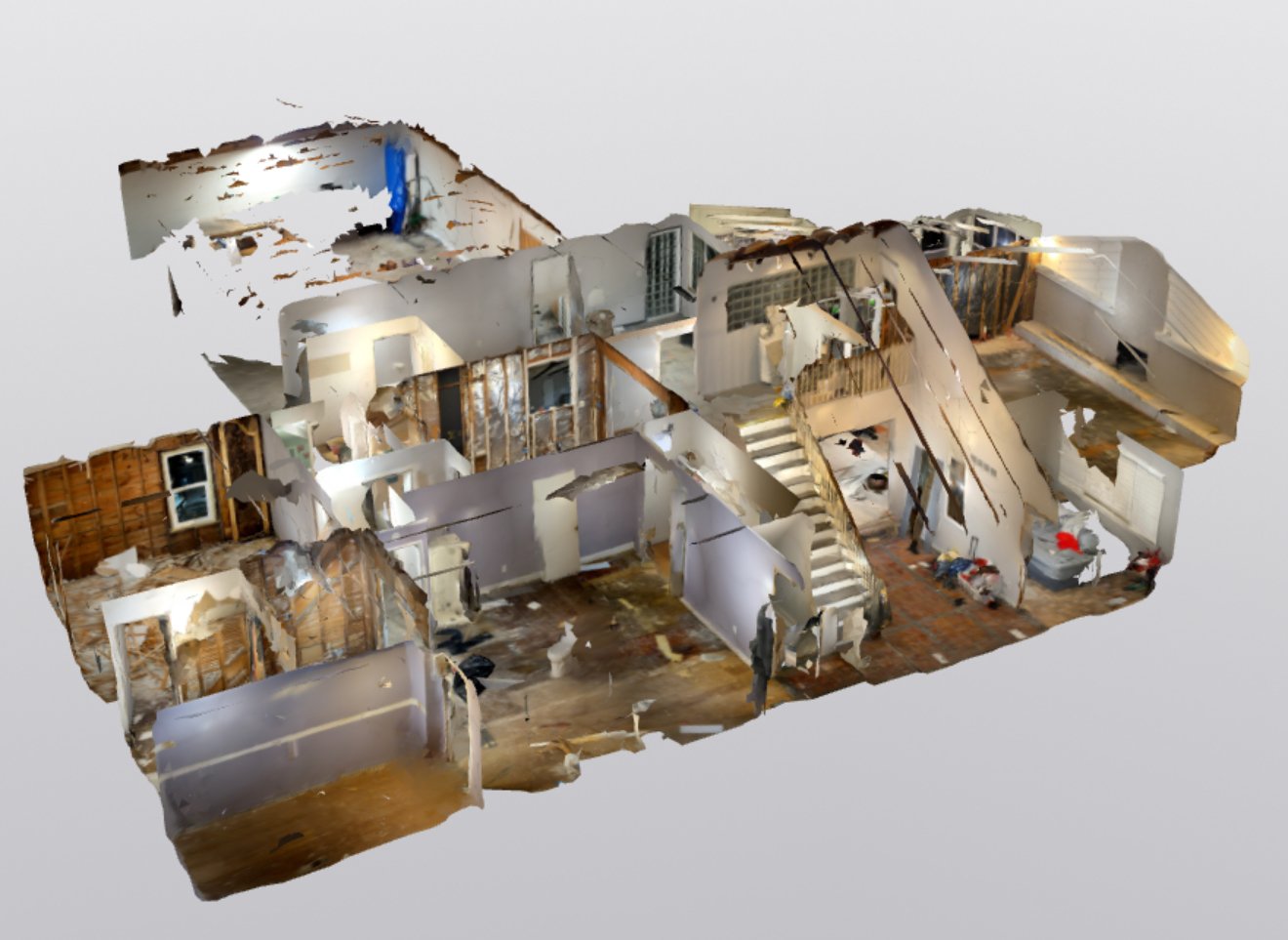
The process begins with a full digital capture of the home.
Advanced scanning equipment records:
wall planes
ceiling heights
roof geometry
window and door locations
floor elevations
structural relationships
This creates a point-cloud model, a precise three-dimensional record of the structure.
From this model, accurate architectural drawings and digital models can be developed.
The result is a reliable foundation for:
addition design
renovation planning
facade redesign
layout reconfiguration
permit preparation
When Scanning Becomes Especially Valuable
High-resolution as-built scanning is often the right step when:
the home has multiple prior additions
rooflines are complex or irregular
renovation investment will be significant
design accuracy is critical
structural changes are anticipated
long-term master planning is underway
In these situations, accurate documentation protects both design quality and construction outcomes.
Investment for 3D As-Built Scanning
Pricing depends on:
home size
structural complexity
level of documentation required
whether full modeling is needed
Typical ranges:
Basic scanning and documentation: several hundred to low four figures
Comprehensive scanning with modeled drawings: mid four figures
Many homeowners find that scanning prevents costly redesign or construction delays later.
Areas Served
3D Hi-Resolution As-Built Scanning is available throughout Farmington Hills, MI, including:
Wood Creek Farms
Ramblewood
Forest Park
Hunters Pointe
Independence Commons
These neighborhoods contain many mid-century homes where precise documentation significantly improves renovation planning.
If You Are Preparing for Serious Renovation Decisions
Once a project involves structural change, additions, or exterior redesign, understanding the exact geometry of the existing house becomes critical.
3D scanning is not about technology.
It is about seeing the house clearly before asking it to change.
