
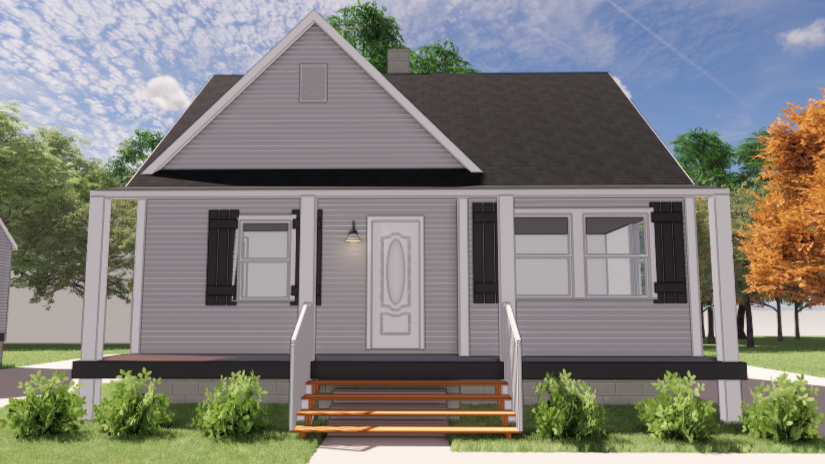
When people think about what devalues a house, they usually jump straight to old finishes, dated kitchens, or paint colors that feel stuck in another decade.
Those things matter.
But they are rarely the biggest problem.
What hurts a house most is usually a combination of deferred maintenance and bad design decisions.
Roof failure, moisture intrusion, outdated systems, and structural neglect can absolutely drag down value. A house with water problems or major maintenance issues will always raise concerns.
But in established neighborhoods, there is another kind of damage that homeowners often underestimate: renovations that make the house feel architecturally confused.
This happens all the time.
A dignified older home gets cheap replacement windows with the wrong proportions.
The front entry loses its visual importance.
A porch gets added without respecting the original roofline.
An addition gets tacked on with no relationship to the existing form.
Details from different styles get mixed together until the whole house starts to feel generic, unresolved, and strangely cheaper than it should.
That is the part many homeowners miss.
Buyers may not be able to explain exactly what feels wrong, but they feel it immediately.
A house with poor composition often feels less valuable, even when a lot of money has been spent on it.
And that is what makes design mistakes so costly. They do not just fail to add value. They can actively erase it.
That is why protecting value is not only about maintenance.
It is also about design integrity.
The most successful renovations do two things at once:
they correct what is failing
they preserve the visual logic that made the house worth loving in the first place
They make the home feel more complete, not more confused.
For older homes especially, value comes from coherence.
When the proportions make sense, the entry feels intentional, the windows belong, and the additions read naturally, the house feels settled and confident.
That feeling matters.
It affects curb appeal, resale, buyer confidence, and long-term satisfaction.
If you are worried about making changes that hurt resale or long-term appeal, begin with a plan that respects the house instead of fighting it.
👉 Book your Home Revival Blueprint Session and get a design-first strategy that protects your home’s charm, improves function, and helps every dollar work harder.
